
On the 28th we left camp at 7.30 a. m., Col. Parsons, commanding Ninth Tennessee Cavalry, in the advance. The remainder of the troops marched in the following order: Thirteenth Tennessee Cavalry, Battery E, First Tennessee Light Artillery, Eighth Tennessee Cavalry, the train I left at Panther Springs under a guard of two companies of the Ninth Tennessee Cavalry.
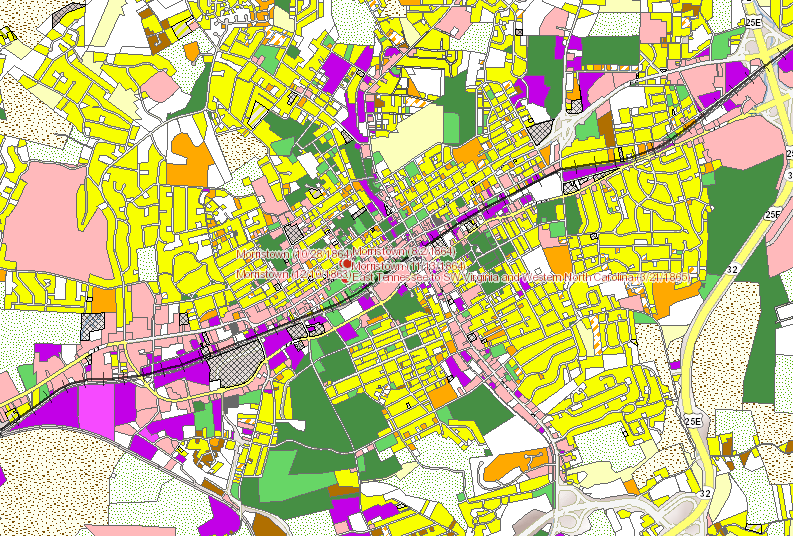
The enemy’s pickets were met soon after leaving camp, and rapidly driven in. About 9 a. m. we came upon the enemy’s skirmish line about one mile and a half from Morristown. Col. parsons immediately charged and drove them back upon their main body, which was discovered drawn up in two lines, one just west, the other east of the village of Morristown. The lines extended entirely across the open fields, with the flanks resting on the woods, their artillery on the flanks of the second line. The distance between their lines was about 800 yards.
I brought forward Patterson’s battery, and placing it on an eminence on our right flank shelled their front line for a short time, whilst Lieut.-Col. Ingerton was forming his regiment in a column of fours by companies. Everything being ready I ordered Col. Ingerton to charge the center and right of their front line. The distance separating our line from that of the enemy was about 1,000 yards.
The first 600 yards of this distance was passed over at a walk, and with an utter disregard for the shower of shells hurled at them by the enemy’s artillery, and which could not be replied to by our artillery without endangering our own troops. When about 400 yards from the enemy’s line our cavalry took a trot. Soon after the enemy opened a musketry fire from his entire line, and Ingerton charged. For a moment both parties were enveloped in smoke; the next the rebels were seen fleeing, hotly pursued by Ingerton’s regiment.
Just at this time the enemy endeavor to turn our right flank. Col. Parsons was ordered to meet this movement and turn the enemy’s left flank. It was my intention not to charge their left flank and second line until Parsons had obtained a position from which he could cut off their retreat, but before Parsons could complete his move I perceived the enemy preparing to charge our battery.
I immediately ordered Col. Patton, commanding Eighth Tennessee Cavalry, to charge their left and center, whilst Ingerton, who had reformed his regiment, should charge their right. Both charges were gallantly made, and the enemy routed and fled. The entire command were then ordered to pursue, and the order was promptly obeyed and the enemy followed beyond Russellville.
Their loss was 85 left dead on the field, including 6 officers; 224 captured, including 19 officers; 5 pieces of artillery with caissons complete, all their ammunition for small-arms; also 6 wagons were captured. Our loss was 8 killed and 18 wounded.
Where all behaved with so much gallantry it would seem invidious to mention individuals, but I hope Your Excellency will allow me to call your particular attention to Lieut.-Col. Ingerton, commanding Thirteenth Tennessee Cavalry, who led the first charge and broke the enemy’s first line without firing a shot. I earnestly recommend that he may be appointed to the command of the first regiment of Tennessee Cavalry that becomes vacant.
Col.’s Patton and Brown, of the Eighth Tennessee Cavalry, and Col.’s parsons and Brownlow, of the Ninth Tennessee Cavalry, led their regiments with distinguished gallantry. Capt. Patterson and Lieut. Regan, Battery E, First Tennessee Light Artillery, displayed the same skill, coolness, and daring that has characterized their conduct since we have been in East Tennessee.
To my personal staff-lieutenant J. B. Carpenter, acting assistant adjutant-general; Lieut. O. C. French, acting assistant quartermaster; Lieut.s. J. J. Douglas, B. A. Miller, and D. M. Nelson, aides-de-camp, and Capts. George E. Grisham and B. P. Stacy, provostmarshal—I am under many obligations for the prompt and gallant manner in which they transmitted my orders to different parts of the field.
Surg. A. L. Carrick medical director, is entitled to much credit for he manner in which he provided for our wounded, embarrassed as he was by the large number of the wounded left behind by the enemy without medical attendance, all of whom received the same care of our own wounded. The forces engaged in this battle were about equal on each side and were exclusively Tennesseans, except the Sixteenth Georgia (rebel) Regt. [Battalion.].
I omitted to mention at the proper place that we picked up over 300 stand of small-arms that had been thrown away by the enemy. Some of these I had distributed to citizens to defend themselves against guerrillas, the remainder I have deposited at the office of the assistant quartermaster for Tennessee troops.
The enemy could not have lost less than 500 in killed, wounded, and captured. In this action their killed and captured amounted to 310 men. Among their wounded was Gen. Vaughn.
I am, Governor, very respectfully,
ALVAN C. GILLEM, Brig.-Gen., Cmdg.
Governor ANDREW JOHNSON, Nashville, Tenn.


