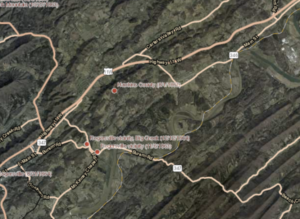
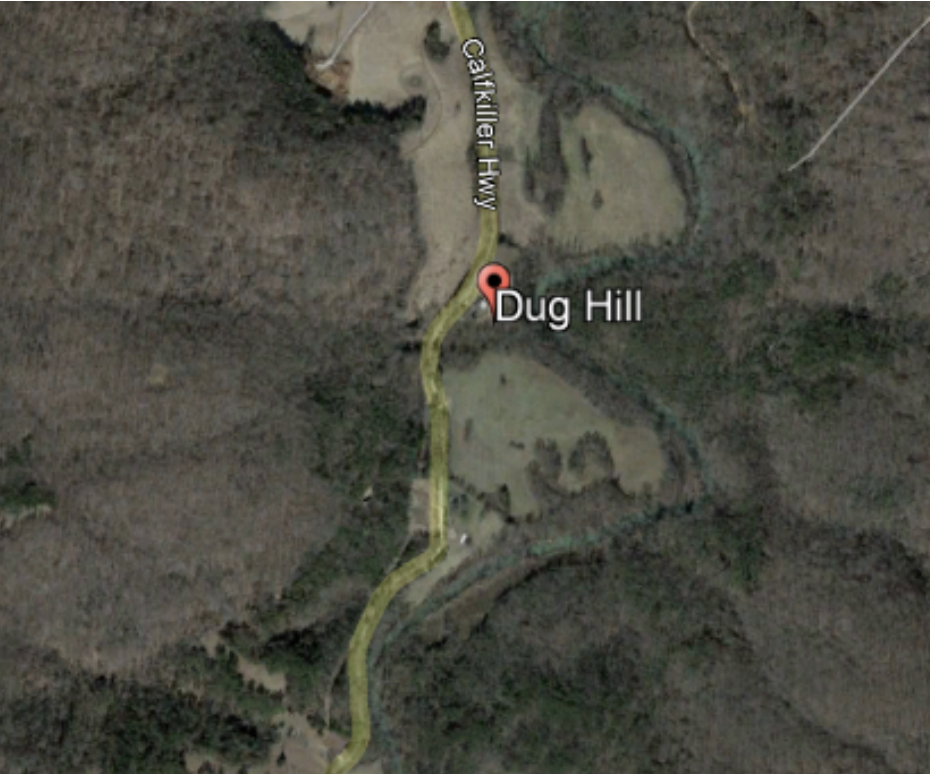
Excerpt from the Report of John M. Hughs, on activities from January 1-April 18, 1864, relative to skirmish on Calfkiller River, February 22, 1864.
On the 22d of February we met a party of “picked men” from the Fifth Tennessee (Yankee) Cavalry, under Capt. Exum. This party had refused to treat us as prisoners of war, and had murdered several of our men whom they had caught straggling from their command. The enemy numbered 110 men; my own force was about 60. The fighting on our part was severe in the extreme; men never fought with more desperation or gallantry. Forty-seven of the enemy were killed, 13 wounded, and 4 captured; our loss was 2 wounded.
OR, Ser. I, Vol. 32, pt. I, p. 56.
FEBRUARY 22, 1864—Skirmish on Calfkiller Creek, Tenn.
Report of Col. William B. Stokes, Fifth Tennessee Cavalry [Union]. Note 1
HDQRS. U. S. FORCES, Sparta, Tenn., February 24, 1864.
SIR: I have the honor to report that I arrived at this place on the 18th instant with Companies A, B, G, I, K, and L, of the Fifth Tennessee Cavalry. I have occupied all of the deserted houses in the town with my men, barricaded the streets strongly, and fortified around my artillery.
Since my arrival I have been engaged in scouring the country and foraging, the forage being very scarce and at some distance from the town. I have ascertained that the country is infested with a great number of rebel soldiers under Col.’s Hughs, Hamilton, Ferguson, Carter, and Bledsoe, the whole force being under Col. Hughs, a brave, vigilant, and energetic officer.
There is little or no robbing being done by the guerrillas, their attention being directed toward my men. Col. Hughs’ command is well armed, having secured the best of arms when on their raids into Kentucky. They number at least 600 fighting men.
On the 22d instant, two companies of my command of Hughs, Ferguson, Carter, and Bledsoe. After fighting some time they were surrounded and overwhelmed. The officers [6 in number] with 45 men have come in through the hills.
Yesterday Carter made a dash on one of my picket-posts. He had 6 of his men dressed in Federal uniform. The remainder were dressed in gray, and as those dressed in our uniform approached the vedettes they told them not to shoot, that the rebels were after them; and as those in gray appeared a few yards in the rear of those in blue hallowing to them to surrender the story appeared very plausible, and the ones in blue immediately rushed upon the reserve pickets.
Four of my pickets were killed—3 after they had surrendered and the other after he had been captured. A great many of the rebels were dressed in our uniform at the time the two companies were attacked, and several of my men were killed after they were captured. Hughs himself does not allow this barbarity, but his subordinate officers practice it.
I have to fight for every ear of corn and blade of fodder I get. Deserters from the rebel army are constantly joining Hughs. The people are thoroughly and decidedly disloyal, but a great many are taking the oath. The oath of allegiance has been found on the persons of several soldiers we have killed.
The country is rocky and mountainous, and very had for cavalry to operate in. I have to fight rebel soldiers and citizens, the former carrying the arms and doing the open fighting; the latter, carrying news and ambushing.
Portions of Companies C, F, and H arrived to-day. The greater part of these companies remained at Nashville, being without horses. I earnestly urge that they be mounted as soon as possible, and ordered to report to me. Their services are needed very much here, and not at the city of Nashville.
Horses are required to mount my men. There are no serviceable ones in the country, the rebels having taken all of them. The rebels are mounted on the fastest horses in the country, and they use them very much to our disadvantage. If all of my regiment were here and mounted, I would soon disperse the rebels. I again urge the necessity of mounting my entire regiment and ordering it to the field.
I respectfully ask that this communication be forwarded to department headquarters for the information of the general commanding.
I have the honor to be, very respectfully, W. B. STOKES, Col. Fifth Tennessee Cavalry, Cmdg.
OR, Ser. I, Vol. 32, pt. I, pp. 416-417.
Note 1: This report indicates a ruse de guerre on the part of Confederate guerrillas. Three or four soldiers were killed in the action, and nineteen others were taken prisoners and deliberately murdered after they had surrendered and given up their arms. The heads of some of the unfortunate prisoners were riddled with balls, one man receiving seven bullets.
On the 23rd pickets of the 5th were attacked, and Wilcher, a vidette, a noble young soldier, captured, carried a short distance and cruelly murdered. Colonel Stokes, on hearing of the savage mode of warfare practiced by Champ Ferguson and other guerrilla chiefs, issued orders to take no prisoners.
A desperate contest commenced, in which our loss was seven or eight killed and but a few wounded and that of the guerrillas not less than a hundred killed and a large number wounded. Captains Blackburn and Waters, in command of a detachment of the regiment, attacked Huhges and Ferguson on Calfkiller Creek, and one of the severest battles ensued, in which several were killed on both sides, Ferguson badly wounded and the guerrillas put to flight. This victory was won by Capt. Blackburn and his men.
Report of the Adjutant General, p. 442.
Note 1: One account of the trouble at Calkfiller Creek tells of the cruel and inhuman treatment of Federal prisoners of war by Champ Ferguson and other guerrilla leaders in the vicinity, and the retribution taken by Stokes and the Fifth Cavalry on February 23, 1864.
A detachment of the Fifth Tennessee Cavalry was attacked on Calfkiller Creek by a large force of guerrillas on the 22d, and a severe engagement followed.
I have just heard nine or ten big guns. It is the Yankees at Sparta. I fear they are fighting but they fired yesterday and were not fighting there, but there was a dreadful fight up the river yesterday. Our folks tell it that they killed 35 or 40 of the enemy and got two men wounded. They lay in wait for them and I fear killed them after they surrendered. But I do hope they did not do that.
We are all dreadfully uneasy. Some of the neighbors started to town today to take the oath but, hearing that those that went to the speaking yesterday did not get back, they did not go. What a dreadful pass the country has come to! It is awful to think of men being slaughtered in such a style. The people are rejoicing to think that so many of the enemy are gone to their account. I can’t rejoice. I cannot be glad at any death, at any murder, and what is it but murder? I think I love my country, but if I had my way there would never be a single man killed.
Diary of Amanda McDowell, entry for February 24, 1864.