WM. GWIN, Lieut., Comdg. Division of Gunboats, Tennessee River.
FlagOfficer A. H. FOOTE, U. S. Navy, Commanding Naval Forces on Western Waters.
Navy OR, Ser. I, Vol. pp. 643-645.
Chicago Post Narrative
Cairo, Monday, March 3 [1862]
The discovery of a new rebel battery on the Tennessee River, mentioned by telegraph, was made in this wise. Hearing that the rebels were planting a new battery somewhere near Savannah, the wooden gunboats Tyler and Lexington were ordered to make a reconnaissance up the river and shell them out. The boats left Fort Henry Friday morning, and proceeded slowly, examining the shores carefully as they went along. They were accompanied by the transport Izetta, with two companies of the Thirty-second Illinois regiment.
They passed Savannah about ten o’clock Saturday morning, having as yet discovered no signs of the expected battery. But now the transport was ordered to keep well in the river, as at any moment a shell or round shot might announce the unpleasant proximity of the object they were in quest of.
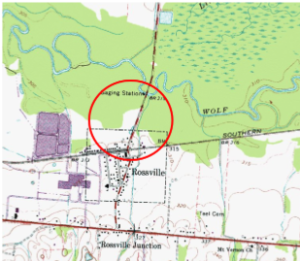
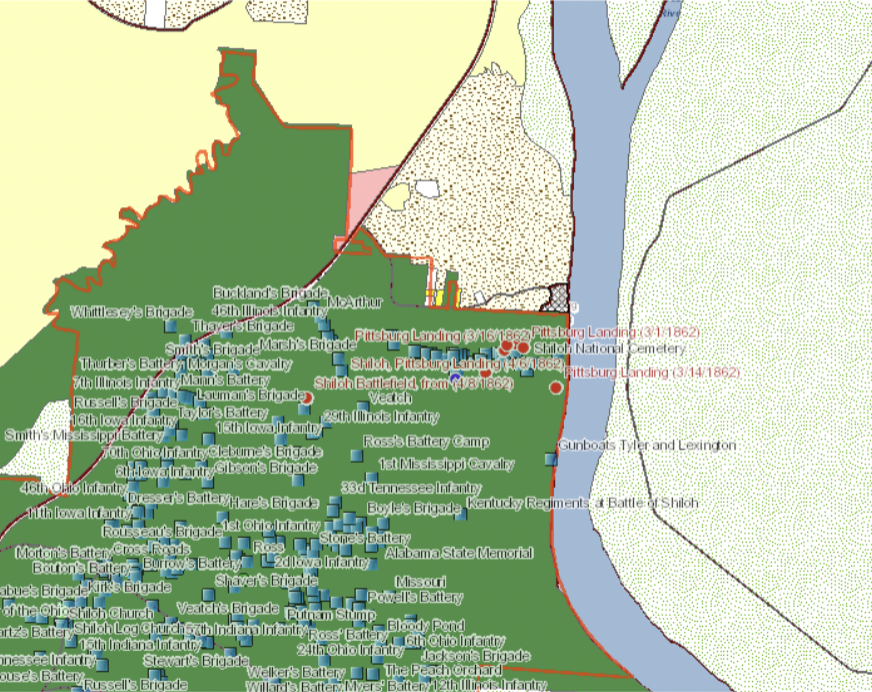
Eight miles above Savannah we came to a little town called Pittsburgh, a miserable-looking little hamlet, as they nearly all are in this region. There is an island here in the river, called Diamond Island, and just as we came out of the channel at its head, bang! went a rebel cannon, and a twenty-four pound shot came plunging toward us from the rebel battery situated less than half a mile in our advance. It was followed by two other shots from smaller guns, before our big guns responded.
We steamed right on toward them, and opened at about six hundred yards, with shell. Their battery consisted of one twenty-four-pounder rifled gun and three twelve-pound howitzers. The twenty-four-pounder fired only six shots, when it was silenced, either by our fire or from some other cause. The three smaller guns blazed away for about twenty minutes, when they also ceased firing, not a single one of their shots from the beginning having touched either of our boats.
Our gunboats kept up their fire for half an hour longer, shelling the woods in all directions. When the firing commenced, a small body of rebel infantry was also discovered, who undertook to put in practice the plan which some Memphis newspaper editors proposed, namely, to conceal themselves on the bank and pick off the pilots of our gunboats. They soon found they might as well attempt to swallow an oyster without opening the shell. A few discharges of grape sent them helter-skelter over the brow of the hill.
After the woods had been shelled pretty thoroughly, and nothing more been seen or heard of the enemy, about forty soldiers and marines, under command of a lieutenant, were sent ashore to reconnoiter the neighborhood. They proceeded up the long slope of the hill to the distance of a thousand yards or more from the landing, when they suddenly found themselves face to face with two or three regiments of rebel infantry, who immediately shot at them.
Our men returned the compliment, and immediately retired to the shelter of a log house, some five hundred yards from the shore, where they made a stand, and peppered away at the rebels as vigorously as if they expected to drive the rebel ten or fifteen hundred. The gunboats hesitated to reopen on the rebels, lest they should kill some of our own men, but waited in the momentary expectation that they would return to the boats.
They did not do so, however, until the lieutenant commanding, (whose name I cannot learn) discovered that the rebels were flanking him on both sides, for the purpose of making prisoners of this little command. He then ordered a retreat, and the gallant forty made the best time they could to the boats, when they reached, with the loss of three men killed and seven or eight wounded.
The rebels pursued hotly, and getting behind trees, fired both at our men in the boats and at the gunboats, perforating the latter with a good many musket-balls, but injuring no one except the officer in command of the boathowitzer on the upper-deck, one of whose legs was shattered by a Minie-ball, rendering amputation necessary. The gunboats reopened their batteries with grape, which caused the rebels to retreat with most undignified rapidity over the hill again.
Seeing and hearing no more of them, the gunboats moved down the stream a short distance, and lay at anchor. Having none but fifteen-second fuse shells, the gunboats were unable to do the execution at short range which they could have done with shorter fire. Accordingly the Lexington was despatched to Cairo for a supply of the desired ammunition, while the Tyler remained to look after the new rebel battery.
The place where it was found is a sort of natural fortification, the hill furnishing a hollow just over the first ridge, in which the rebel infantry took shelter from our fire. In this particular it resembles Fort Donelson.
Rebellion Record, Vol. 4, pp. 221-222.
Another account, also published in the Natchitoches Union for March 27, 1862, was written in French.
Report of Lieutenant Gwin, commanding U. S. S. Tyler.
U. S. GUNBOAT TYLER, Savannah, Tenn., March 1, 1862.
SIR: Having learned that the rebels had occupied and were fortifying a place called Pittsburg, nine miles above, on the right bank of the river (the best point in the river for that purpose), I determined to attack them.
At 12 m. the Tyler, followed by the Lexington, Lieutenant Commanding Shirk, proceeded up the river. When within 1,200 yards of Pittsburg we were opened upon by the rebel batteries, consisting, as well as we could determine, of six or eight fieldpieces, some rifled. Getting within 1,000 yards, the Tyler and Lexington opened a well-directed fire, and we had the satisfaction of silencing their batteries.
We then proceeded abreast of the place and, under the cover of grape and canister, landed two armed boats from each vessel containing, besides their crews, a portion of Company C, Captain Thaddeus Phillips, and Company K, First Lieutenant John J. Rider, of the Thirty-second Regiment Illinois Volunteers (sharpshooters), Second Master Jason Goudy, commanding the boats of the Tyler, and Second Master Martin Dunn, commanding the boats of the Lexington.
The landing was successfully accomplished, and this small force actually drove back the rebels and held them in check until they accomplished their difficult object, which was to discover their real strength and purpose, and to destroy a house in close proximity to the place where the batteries had been placed.
I found in addition to their artillery they had a force of not less than two regiments of infantry and a regiment of cavalry. In conclusion, I have to state that the result was entirely satisfactory. Their batteries were silenced in a short time; the landing was effected; the house destroyed; and we discovered from their breastworks that they were preparing to fortify strongly this point.
Too much praise can not be given to Lieutenant Commanding Shirk for the efficient manner in which his vessel was handled. My thanks are due to Captain Phillips, Lieutenant Rider, and their men for the gallant manner in which, in the face of the enemy, they charged up the hill, drove back, and held in check, the rebels until the boats’ crews had effected the destruction of the house designated.
The officers and men of this vessel behaved with the greatest spirit and enthusiasm. Much praise is due to First Master Edward Shaw and Third Master James Martin for the efficient manner in which the batteries were worked.
I would particularly call your attention to the gallant conduct of Second Master Jason Goudy, in charge of the boats on shore, who succeeded in destroying the house under such heavy fire, and Gunner Herman Peters, in charge of the howitzer, who displayed the greatest coolness and courage, although exposed to the whole fire of the enemy, all but one of his men having been wounded.
My thanks are also due to Pilots Hiner and Sebastian for their coolness under such a tremendous fire of musketry, our vessel being perfectly riddled with balls.
~ ~ ~
We expended 95 shell, 30 stand of grape, 10 of canister, and 67 rounds of shrapnel, grape, etc., from howitzer. I feel confident that we inflicted a severe loss on the enemy, as several bodies were seen on the ground and many seen to fall.
~ ~ ~
Very respectfully, your obedient servant,
WM. GWIN, Lieut., Comdg. Division of Gunboats, Tennessee River.
FlagOfficer A. H. FOOTE, U. S. Navy, Commanding Naval Forces on Western Waters.
[Confederate Account]
On March 1 two of the enemy’s gunboats were in sight; at about 1 o’clock p. m. our artillery (Miles’) opened fire, but before our regiment could form a line of battle the artillery had ceased firing and was running shamefully.
As soon as our line was formed our Colonel marched us away from camp into a ravine; being too much exposed there we were moved to another one where we remained until the enemies landed. Then the fire commenced on both sides, but it was not long before the Federals took to their heels for their gunboats.
Had it not been for a misunderstanding we would have taken most of them prisoners; we took only four prisoners and killed one on shore, but there were a great many of them killed in the boats. It is stated that their loss is from seventy to eighty killed. Our loss is seven killed and nine wounded. . .
~ ~ ~
The engagement lasted three hours, during which time the shells fell thick and fast around us.
~ ~ ~
The same night of the fight our regiment fell back two miles; our company was left in camps to guard the baggage. The next morning about 8 o’clock, the gunboats reappeared and commenced shelling again, but they did not venture to land-they kept on the Tennessee River. No one was hurt the second day.
I assure you there was no fun in the fight, especially where they are throwing shells and you have no chance to shoot.
SOR, Ser. I, Vol. 1, pp. 524-525.