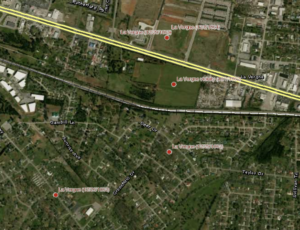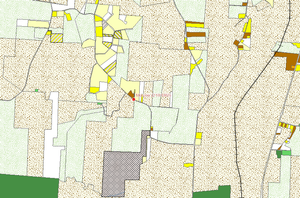
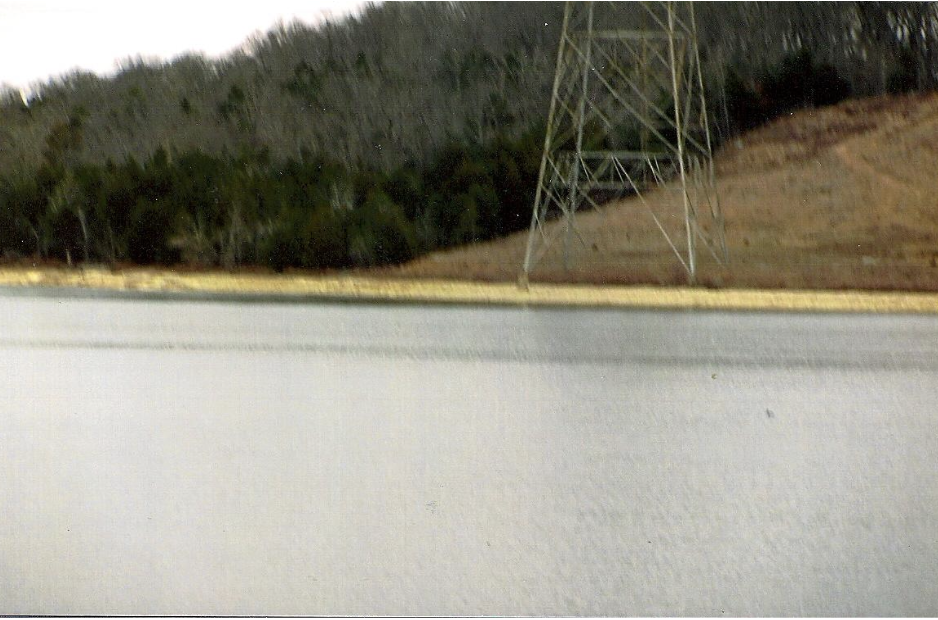
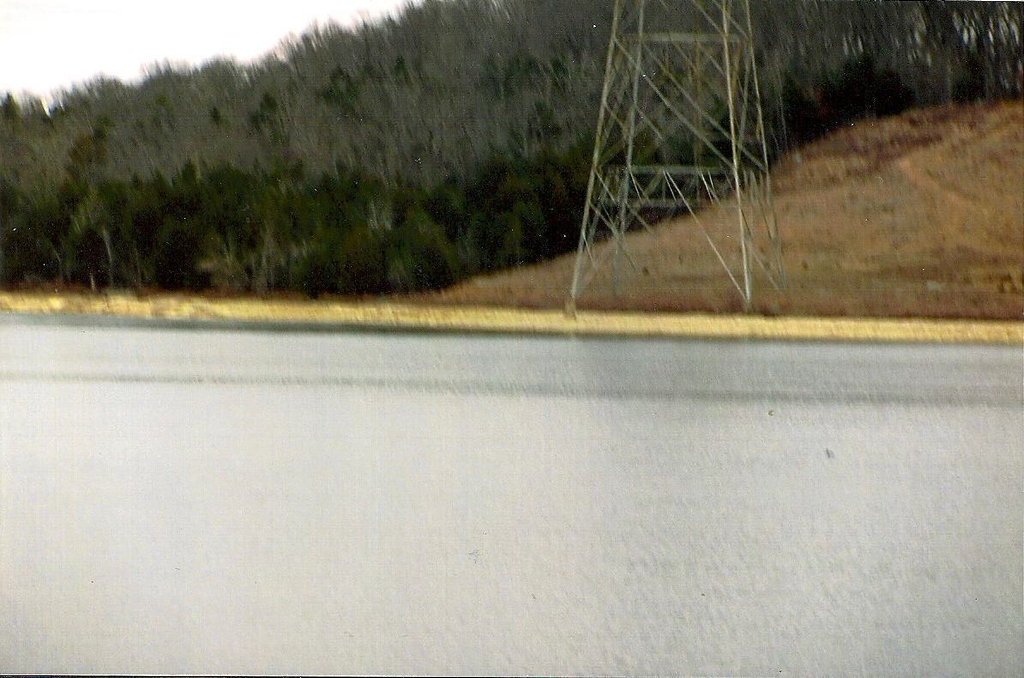
View of site looking northwest from the southwest corner of bridge on Hobson pike.
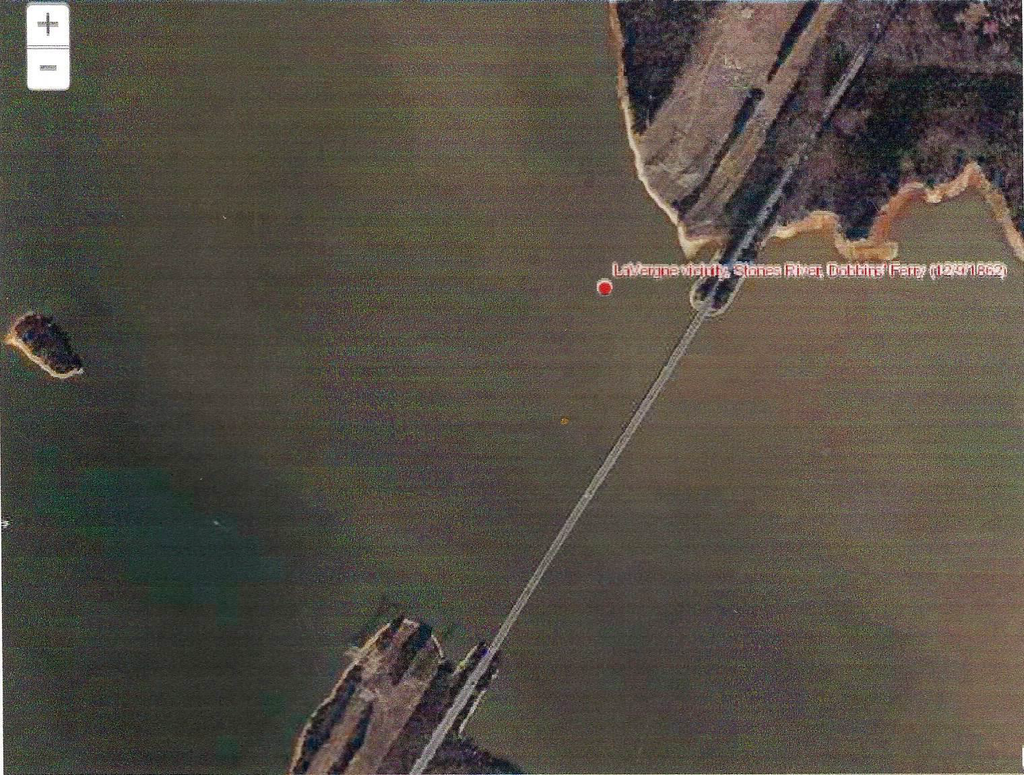
December 9, 1862 – Skirmish at Dobbins Ferry near La Vergne (note 1)
December 9, 1862 Skirmish at Dobbins Ferry, near La Vergne, Tenn.
LIST OF REPORTS.
No. 1 – Maj.-Gen. Thomas L. Crittenden, U. S. Army
HDGRS, LEFT WING, December 9, 1862.
COL.: I am this moment in receipt of a note from your headquarters, asking me if Gen. Stanley has come in yet. I presume this must refer to the foraging expedition of Col. Stanley Matthews.
As soon as I arrived at camp I sent an order to Gen. Van Cleve to return to me a full report; but it has not happened yet been sent. As soon as it comes in it shall be forwarded.
Eight wagons from my headquarters accompanied the party. They have all returned, well filled, but report that Col. Matthews had a sharp skirmish, having quite a number killed and wounded, but that the wagons were filled and none were lost.
Since your orderly arrived, the inclosed note from Col. Grose has been received through Gen. Smith. I declined to permit him to attack, for fear it might interfere with the proposed reconnaissances.
Should you think differently, advise men, and I will yet direct the attack to be made.
A prisoner, taken by some of our troops and brought to me, reports that the attack was made by six regiments of cavalry, under Wheeler, who fought principally as infantry, being armed with Enfield rifles and navy revolvers; that the regiments are, however, greatly reduced, and do not number, all together, over about 1,500 men, and that this is the only force about La Vergne; also that Bragg left last week for Richmond; that Johnson is in command, and is camped some 4 miles this side of Murfreesborough; that his force numbers about 35,000 men. I will send him to you in the morning.
Most respectfully, your obedient servant,
T. L. CRITTENDEN, Maj.-Gen., Cmdg.
No, 2.
Report of Surg. M. C. Woodworth, Fifty-first Ohio Infantry.
HDGRS, TWENTY-THIRD BRIGADE, December 12, 1862,
CAPT.: Pursuant to orders just received, I have the honor to report the result of my journey within the enemy’s lines, under a flag of truce, to recover our wounded in the skirmish of the 9th.
I left our outpost, accompanied by Drs. Russell and Mills, with an orderly and three ambulances, about 10 a.m., on the road passing from the Murfreesborough and to the Chicken pike, about 1 mile beyond the insane asylum.
I passed about 5 miles on the Chicken pike, in the direction of Stone’s River, to a house where we had left one of the wounded-he being too severely wounded to move-which we left on the evening after the engagement. I found that a flag of truce had just removed his body to the enemy’s lines.
I left the Chicken pike just this side of the burned bridge crossing Stone’s River, leaving the road to my left, and passed on about 1½ miles, to a house where I had left 6 of our men, who were wounded when the enemy made their last attack on the rear of our train.
I found that the enemy had buried one of our dead left upon the field, also one of our wounded, who had died from a wound of the abdomen. I sent the remaining five in two ambulance and passed on about 1 mile in the direction of La Vergne, where I came to the enemy’s outpost.
I here waited one-half hour for the arrival of a proper officer to receive the flag, when Lieut. Col. William S. Hawkins, of Gen. Wheeler’s staff, came and escorted me to the house of Dr. Charlton, where I found one of our wounded, also one of the enemy’s wounded, fatally.
They spoke of it as battle rather than a skirmish, (note 2) and admitted a loss of 8 men killed upon field. The picket at the outpost said they had carried away a large number of wounded, but would not state how many.
I took our wounded man in the ambulance, and left their lines to return about 4 p. m. Col. Hawkins assured me they had but one of our men prisoner, a lieutenant of the Eighth Kentucky Volunteers, who was slightly wounded in the back, and that he had been well cared for by their surgeons, and would soon be sent to our lines.
The wounded on the field were all from the Eighth Kentucky Volunteers, and had all been paroled the day previous. Col. Hawkins accompanied me about 2 miles from their lines on my return. I saw no force of the enemy this side of their outposts.
I am, captain, very respectfully, your obedient servant,
M. C. WOODWORTH, Surgeon 51st Ohio Vols., Acting Medical Director 23d Brigade.
OR, Ser. 1, Vol. 20, pt. 1, pp. 73-74
Note 1: Confederate reports referred to this as a battle, not a skirmish.
Note 2: One participant’s battle was another participant’s skirmish. This points out the confusion caused by what today may be regarded as the precise nature of definitions used for military engagements during the Civil War.
The 35th Indiana Infantry, the 8th & 21st Kentucky Infantry, the 51st Ohio Infantry, the 7th Independent Battery, Indiana Light Artillery & 6 units of Wheeler’s Calvary were in this battle.