
Battle of Hay’s Ferry—Fighting for Food
In November 1863, Confederate Gen. James Longstreet led a force from Chattanooga to attack Union Gen. Ambrose E. Burnside’s army at Knoxville. The campaign failed, and in December Longstreet’s men marched east along the East Tennessee and Virginia Railroad to winter quarters at Russellville, where they remained until March 1864. Numerous small engagements between Longstreet’s and Burnside’s armies occurred during the winter.
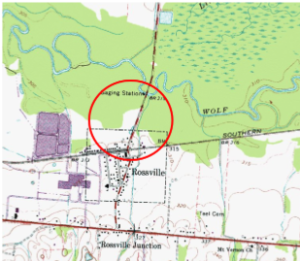
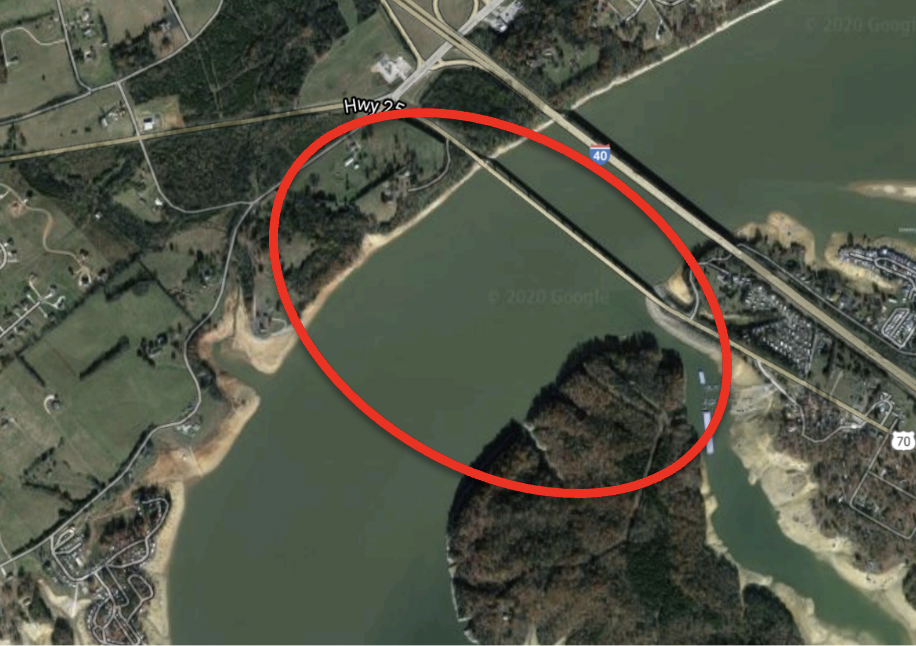
Hay’s Ferry once operated near here. The landscape you see now was quite different during the Civil War. Then, fields of corn grew along the banks of the French Broad River, now submerged beneath the waters of Douglas Lake. This corn, left on the stalk, was often all that stood between Confederate soldiers in East Tennessee and starvation during the winter of 1863.
On the cold morning of December 24, hungry men from both sides began a battle near here that ended hours later, three miles away. The Confederate cavalry, more aggressive in its tactics, pushed the Union troopers from one position to another.
Col. Charles C. Crew’s Georgians captured two Federal guns, but Union horsemen countercharged and recaptured them. Attacked front and rear, the Federals retreated toward New Market as night approached, leaving the river bottoms and its corn still in Confederate hands.
The Clash at Hay’s Ferry was one of several fought in Jefferson County, where food was the ultimate prize.
“This was a sad Christmas Eve to us, and as we gathered around the campfires to discuss the events of the day, many an unbidden tear could be seen trickling down the tanned faces of the men when reference was made to those who had fallen in battle during the day.” — Sgt. William R. Carter, 1st Tennessee Cavalry (U.S.)
The French Broad River bottoms (1941) – Courtesy Richard Taylor
William R. Carter from William R. Carter, History of the First Regiment Tennessee Volunteer Cavalry (1902)
December 23, 1863 – Action at Hay’s Ferry, near Dandridge
No circumstantial reports filed.
Excerpt from the Itinerary of the Cavalry, Army of the Cumberland, Major-General David S. Stanely and Brigadier-General Washington L. Elliot commanding
December 24, Brig.-Gen. Sturgis, chief of cavalry of the Army of the Ohio, and by seniority commanding the cavalry of the Departments of the Ohio and Cumberland, detached the First Brigade of the First Division, Col. A. P. Campbell commanding, to march to Dandridge, in conjunction with some of his own cavalry, and cut off a rebel brigade supposed to be there.
At Hay’s Ferry Campbell briskly attacked the enemy, who, being heavily re-enforced, compelled him to retreat. On the retreat one gun of Lilly’s (Eighteenth Indiana) battery was spiked and abandoned on account of an axle breaking.
In this affair our loss was 7 killed, 47 wounded, and 7 missing. We captured 30 prisoners, besides killing Maj. Bale, of the Sixth Georgia Cavalry, and killing and wounding over 100 of the enemy.
OR, Ser. I, Vol. 31, pt. I, pp. 438-439.