Description of engagement at Antioch Station, April 10, 1863 from Formation, Movement, Camps, Scouts and Battles of the Tenth Regiment Michigan Volunteer Infantry, written and compiled by F.W.H., John Slaters Printing Establishment, Detroit, 1864 (pp. 38-39). Note: the account erroneously references the battle as April 01.


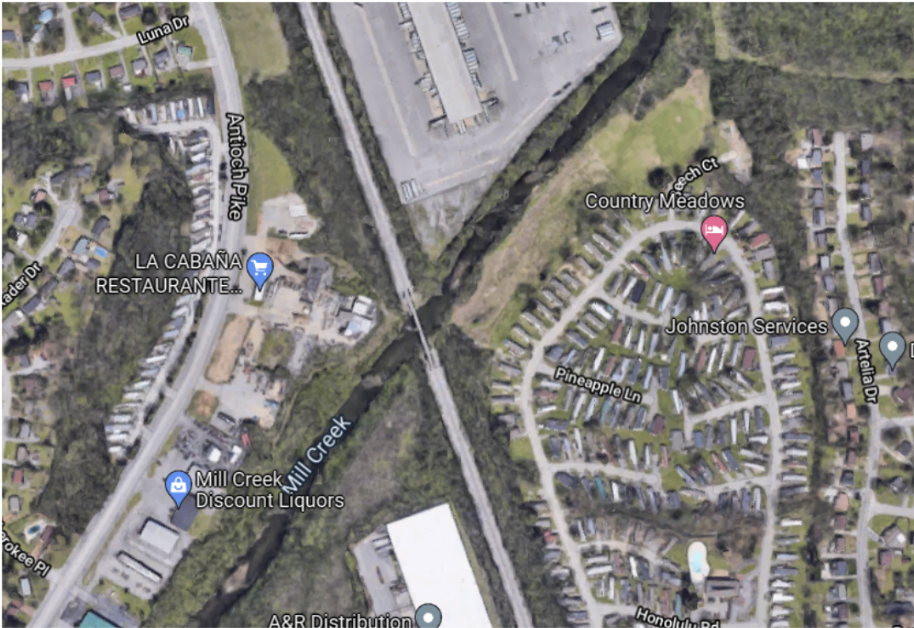
Report of Col. George P. Este, Fourteenth Ohio Infantry, of affair at Antioch Station, Tenn., HDQRS. 2d BRIGADE, 3d DIVISION, 14TH ARMY CORPS, La Vergne, April 12, 1863. COL.: I have the honor to report the following relative to the attack upon the Nashville and Murfreesborough passenger train, upon the 10th ultimo [instant]: The train was attacked 5 1/2 miles from La Vergne, toward Nashville, about 4.30 p. m., by a force of between 200 and 300 rebels, besides a supporting force of about 200 held in reserve, and one threatening the stockade at Mill Creek, in all about 600, under the command of either Gen. Wharton or Col. [Baxter] smith, of the Tennessee cavalry. The resistance by the train guard was of a fable character, owing, doubtless, to the suddenness of the attack and the fatal effects of the rebel fire. The guard soon fled, and the rebels took possession of the train, capturing most of the passengers, releasing some 43 prisoners, plundering the mail and express packages, and robbing the passengers of money, watches, clothing, boots and hats, and setting fire to and destroying seven cars. They accomplished all this in less than twenty minutes and retired with their prisoners and booty, reaching and crossing Williams’ Ford, 10 miles from La Vergne, some time before dark. At a point some 2 miles beyond the river they paroled the prisoners, about 70 in number, excepting Col. Wood, Fifteenth Indiana Volunteers, Col. Buell, Fifty-eight Indiana Volunteers, Maj. Cupp, First Ohio Cavalry, Capt. Milburn and Capt. Bevill, Tenth Kentucky Volunteers, and 7 other officers, who refused to accept a parole. Taking these officers with them, the rebels moved in the direction of Baird’s Mills, upon the Lebanon and Murfreesborough pike, intending to reach there before daylight. The loss of the Federals was 6 killed and 13 wounded, 3 mortally. The rebels lost 6 killed, 6 wounded, and 3 prisoners. I did not hear of the attack upon the train until nearly 6 o’clock, when I immediately ordered out all the cavalry here (about 100) and ten companies of infantry. The cavalry I sent down the pike to intercept, if possible, the rebel retreat, while I placed the infantry upon a train of cars, to be immediately moved to the scene of action. Both cavalry and infantry arrived too late to do any good, the rebels having too far the start. I need not assure you of my vexation at this successful raid. Prior to its occurrence I had received, as I thought, the most satisfactory evidence from scouts, citizens, and contrabands that no rebels were in the vicinity in any considerable force. During the week I had scoured both sides of Stone’s River myself, with the cavalry, without being able either to see or hear of any rebel force. The successful expeditions of Col. Wilder and Gen. Mitchell had caused me to believe that there were no rebel cavalry to the south of Lebanon or west of Liberty. Upon the day of the attack my patrols had failed to discover any signs of the rebel forces. I have since learned that they left Lebanon the morning of the day they did attack, and only reached the place of disaster ten minutes before the train arrived. From all the evidence, I am led to believe that they neither placed any obstructions upon the track nor displaced any rails prior to the attack, but that the tender and cars were thrown off the track by the too sudden reversal of the engine for the purpose of running back. I am now sending upon each day, as far as Antioch, a full regiment of infantry in the freight train in rear of the passenger train going to Nashville. I have two lines of cavalry patrols, extending from La Vergne down 7 miles, but, in order to be better able to guard against such disasters, I ought to have more cavalry or mounted men. I would, therefore, respectfully suggest the concentration of the regiment of cavalry now divided between Stewart’s Creek and La Vergne at this point. Each detachment is too weak to do much by itself, whilst, if together, it might effect much good. I am, colonel, very respectfully, your obedient servant, GEO. P. ESTE, Col., Cmdg