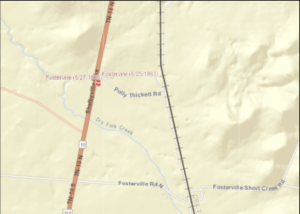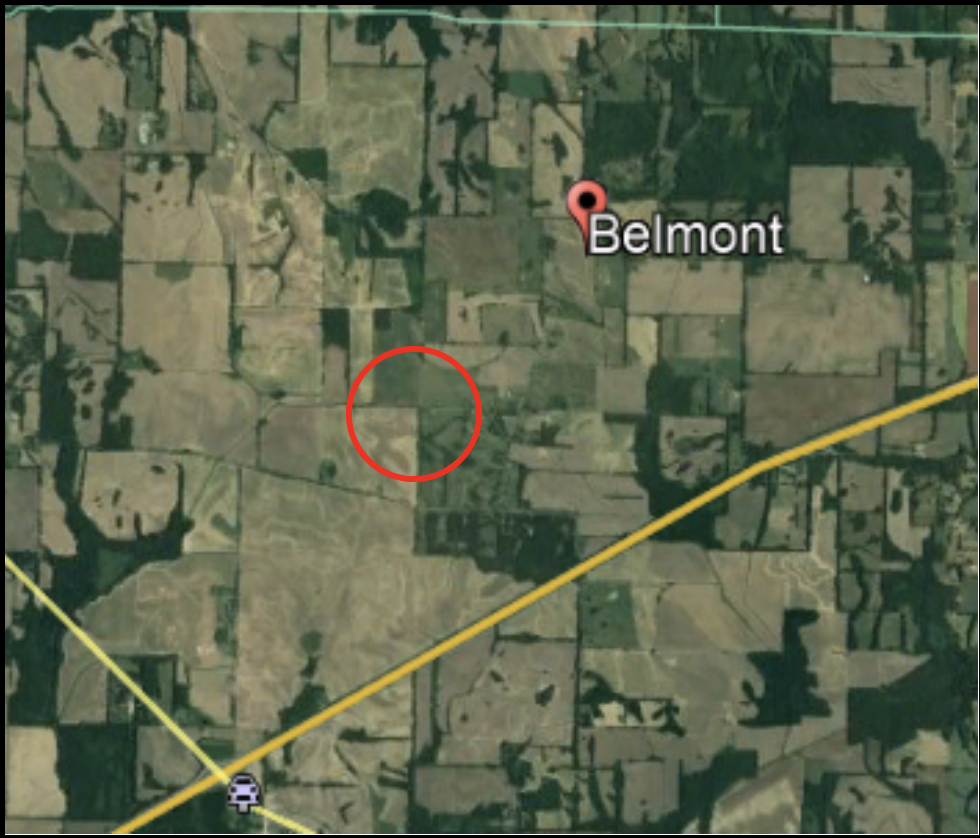
March 28, 1863 – April 3, 1863 – Expeditions from LaGrange to Moscow and Macon, and action near Belmont MARCH 28- APRIL 3, 1863.- Expeditions from LaGrange to Moscow and Macon, and action near Belmont, Tenn. REPORTS. No. 1.-Col. Benjamin H. Grierson, Sixth Illinois Cavalry, commanding First Cavalry Brigade, Sixteenth Army Corps. No. 2.-Lieut. Col. Reuben Loomis, Sixth Illinois Cavalry. No. 1. Report of Col. Benjamin H. Grierson, Sixth Illinois Cavalry, commanding First Cavalry Brigade, Sixteenth Army Corps. LAGRANGE, TENN., April 4, 1863. CAPT.: I have the honor to report that, in obedience to verbal instructions received from Brig. Gen. W. Sooy Smith, on the 28th of March I dispatched 200 of the Seventh Illinois Cavalry, under Maj. Nelson, to proceed westward toward Moscow, and strike the trail of the party who had attacked the train near Moscow. I at the same time sent a force of 200 men of the Sixth Illinois Cavalry, under Lieut.-Col. Loomis, to proceed toward Somerville; thence westward, with instructions to endeavor to intercept the enemy with prisoners from the train, and form a junction with the expedition under Maj. Nelson. This latter officer proceeded westward, struck the trail of the enemy, and followed them to Macon, where, although they were but a few miles in advance, and had prisoners, dismounted, he gave up the pursuit, and returned to camp, failing to comply with his instructions to form a junction with Col. Loomis. The expedition from the Sixth Illinois Cavalry proceeded to Somerville; thence westward, struck the trail of the rebels, overtook and skirmished with them, killing and capturing a number. among the latter Capt. [R. 1 Burrow. The expeditions under Lieut.-Col. Loomis and myself succeeded in killing about 20, wounding from 40 to 50, many of them mortally, and capturing about 50. Our loss was 15 killed, 37 wounded, and 2 captured. When it is remembered that the engagement on the night of March 29 did not last over ten minutes, the desperation of the conflict can be imagined. Respectfully, your obedient servant, B. H. GRIERSON, Col., Cmdg. Brigade. Capt. H. ATKINSON, Assistant Adjutant-Gen. approach, about 35 of the rebels fled precipitately. We followed them closely, and succeeded in killing 3, wounding and capturing several more. Having buried the dead and properly disposed of such of the wounded as could be moved in the ambulances, we proceeded to the plantation of Lewis P. Williamson, and bivouacked for the night. The following morning the wounded and prisoners were sent back under proper escort, and, dividing the rest of the command into two parties, we proceeded in pursuit ofthe enemy. Maj. Blackburn proceeded to Mason’s Depot, where he captured a quantity of secesh army clothing and trimmings, which were destroyed. With the rest of the force I proceeded westward, scouting the country, and forming a junction with Maj. Blackburn at Concordia. After feeding, we again started in different directions, and encamped for the night at the plantation of Mr. Montague, north of the Hatchie River, where we found a quantity of cavalry saddles and a shop for the manufacture of the same. The shop and saddles were destroyed, and his son, who was engaged in the business, taken into custody. The next morning I crossed the Hatchie River with part of my force at Quin’s Bridge, and sent the balance eastward to cross at Cannon’s Bridge. After crossing the river, the forces were divided into small parties, and scattered over all the by-roads and lanes, with instructions to meet the main column at Macon. The whole force arrived there at almost the same time, having succeeded in capturing a number of prisoners, among whom were the quartermaster of Richardson’s regiment and his private secretary, with a number of papers. While in Moscow a portion of the mail captured on the train was retaken, and the man upon whom it was found resisting when attempt was made to capture him, was killed. He was a member of Porter’s guerrilla band. Having encamped for the night about 3 miles southeast of Macon, we returned to this place, via Moscow, on April 3, arriving about noon. No. 2. Report of Lieut. Col. Reuben Loomis, Sixth Illinois Cavalry. HDQRS. SIXTH ILLINOIS CAVALRY, LaGrange, Tenn., April 1, 1863. COL.: In obedience to your order of March 28, received at 11 a. m., I started at 12 m. with 250 men, with one day’s rations, in pursuit of the guerrillas that had temporarily captured that morning a train on the Memphis and Charleston Railroad, between La Fayette and Moscow. Understanding that the Seventh Illinois Cavalry was to proceed direct to the place of capture and follow the trail from there, I proceeded at once to Somerville, there killing 1 and capturing some 15 suspicious characters and soldiers, and proceeded toward Memphis about 5 miles, and encamped for the night. On the morning of the 29th, I detailed Companies B and E, under command of Capt. Lynch, to return to camp with the prisoners. A few soldiers from the different companies, who were too much exhausted to pursue the chase farther, accompanied them, amounting in all to 50 men. I here learned that the prisoners captured from the train had passed through Oakland, 7 miles distant, just a night the previous day, and proceeded immediately in pursuit, passing through Oakland and continuing our course to Hickory Wythe; thence north to Murray’s Bridge, on the Loosahatchee, where we found some 15 of Col. Richardson’s command endeavoring to destroy the bridge; but as we had been in close pursuit for miles, and had ridden very fast, they had not time to do it any damage. Charging upon them at once, after a race of some 5 miles, we captured 7. We then proceeded about 2 miles farther in the direction of Col. Richardson’s camp, when we came upon Capt. Burrow, in command of a large part of Col. Richardson’s force, drawn up in line of battle, awaiting our approach, intending to give us battle, having notified a citizen living near to remove his family, as “they were about to have a fight there.”. As usual, they only awaited the approach of our advance guard, when they turned and fled, giving our weary horses another chase, resulting in the capture of Capt. Burrow and several men, and wounding several others. We then proceeded to Col. Richardson’s camp of the previous day, destroying the buildings used for their purposes, and, after feeding and resting our horses a short time, proceeded on in a northeast course, still hoping to recapture the train prisoners. I was still expecting that the Seventh Illinois Cavalry would overtake me at every moment, not having heard from it since leaving camp. We encamped for the night on the plantation of Mr. Rives, 2 miles southwest of Belmont. Knowing our close proximity to Col. Richardson’s superior force, I posted stronger pickets than usual, having about one-half of my force on guard as picket, camp, and prisoner guards, leaving but about 100 weary, hungry, and sleepy men to rest, who had ridden 50 miles that day, with nothing to eat but meat, and who had been up most of the previous night on guard. Yet, notwithstanding all these precautions, our camp was attacked at midnight by Col. Richardson’s force of from 400 to 600, who had eluded the pickets by dismounting and approaching under cover of a small ravine until within a few yards of our camp, when, at a preconcerted signal, they poured a murderous fire on my command, who, aroused thus suddenly, arose, arms in hand, and returned their fire with such obstinate firmness and dreadful effect that within five minutes from the time the attack commenced they were repulsed with heavy loss, leaving us in complete possession of the field, which we held until about 9 a. m. on the 31st, attending to the killed and wounded on both sides, when we started for camp with our prisoners and all ofour wounded that could ride, which we reached at about 7 p. m. Our loss was 52 killed and wounded; Col. Richardson’s supposed to have been far greater, himself wounded, his major wounded and captured, his adjutant killed, and several other officers, whose names I have not got, killed, wounded, or captured. Inclosed I hand you a complete list of the killed and wounded of my command. Note1 A close examination of the same, together with the situation of the parties engaged will enable you to realize the character of the conflict while it lasted. It would be invidious for me to designate the names of any in ‘particular where all have done so nobly, yet among the fallen I cannot forbear to mention the name of Lieut. Jesse B. Wilson, of Company K, who was among the first to fall while gallantly cheering his men on, telling them to stand firm, but to screen themselves as much as possible behind fences, &c., himself openly standing amid the thickest of the conflict, doing so much to encourage his men. In his fall the regiment loses one of its best officers, the company its leader, and his friends at home a worthy relative and noble citizen. All of which is most respectfully submitted. Your most obedient servant, R. LOOMIS, Lieut.-Col., Cmdg. OR, Ser. I, Vol. 24, pt. I, pp. 481-484. Note 1: List, omitted, shows 1 officer and 12 men killed, 4 officers and 34 men wounded, and 1 man missing. Excerpt from correspondence from Assistant Sec. of Defense, C. A. Dana to Sec. of War, E. Stanton, relative to the action at Belmont. MEMPHIS, TENN., March 31, 1863—1.30 р. m. … The attack of 28th [Saturday] near Moscow is punished by this expulsion. The same attack has also been more severly punished by Lieut.-Col. [Reuben] Loomis, of Grierson’s cavalry, from LaGrange, who was sent by Gen. W. S. Smith with 200 men to pursue the guerrillas. He overtook them Sunday [29th] afternoon, 100 strong, 6 miles southeast of Belmont, Tenn., and after a brisk skirmish they gave way, leaving in Loomis’ hands Capt. [Reuben] Burrow, 1 orderly sergeant, and 9 privates prisoners. Proceeding 5 or 6 miles father, Loomis bivouacked, and precisely at midnight [30th] duty, was attacked by Col. R. V. Richardson with 500 or 600 men. After fighting about fifteen minutes the rebels fell back, leaving on the field 2 lieutenants and 4 privates killed, and Maj. [B. B] Benson mortally wounded. The neighboring people report they had 40 or 50 killed and several wounded, including Richardson himself, whose wounds are dangerous. We lost Lieut. Jesse B. Wilson and 7 privates killed and 35 wounded, many of them slightly, including 4 commissioned officers. Wilson fell very gallantly in the thick ofthe melee, fighting in his shirtsleeve as he had sprung from sleep. The rebels fled from their own camp at 2 o’clock in the morning. Loomis brought in 20 prisoners. C. A. DANA, Assistant Secretary of War.