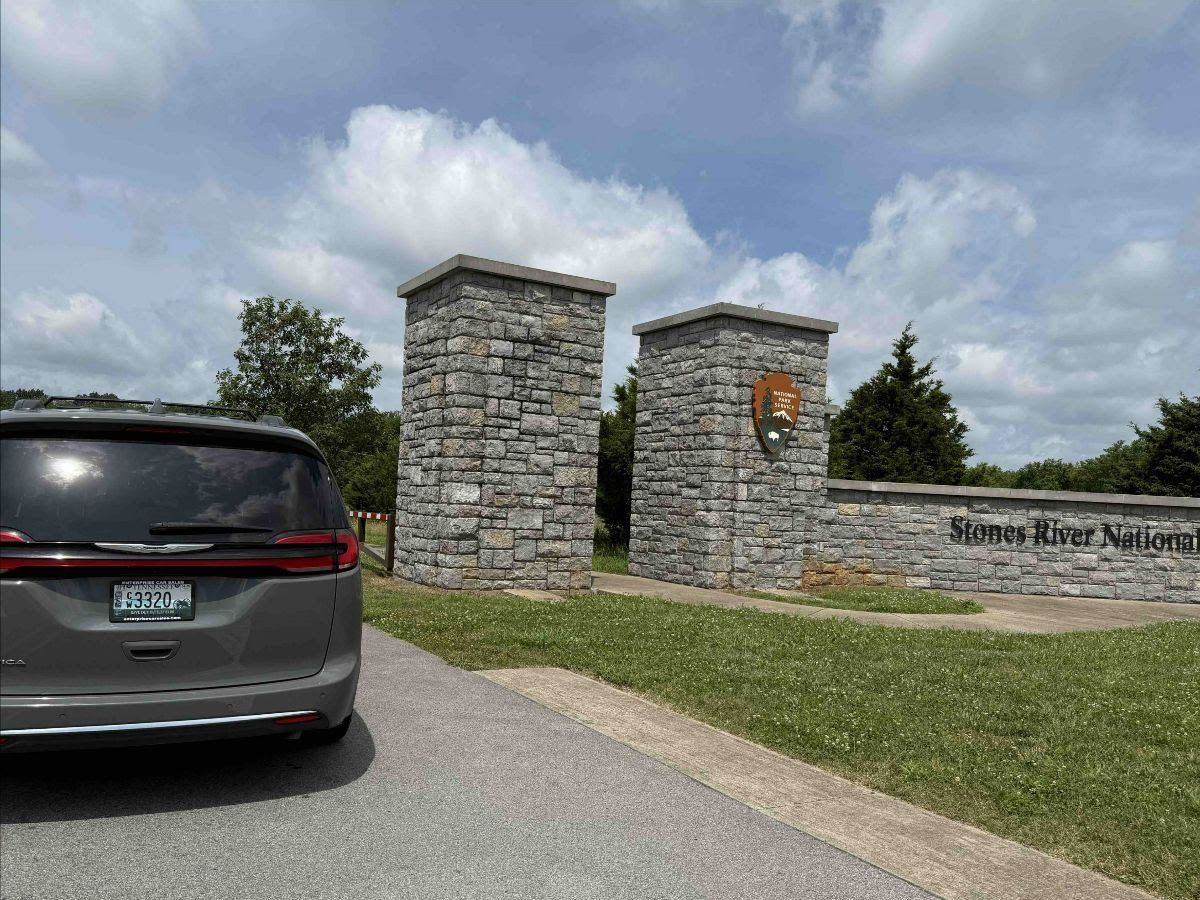
As 1862 drew to a close, President Abraham Lincoln was desperate for a military victory. His armies were stalled, and the terrible defeat at Fredericksburg spread a pall of defeat across the nation. There was also the Emancipation Proclamation to consider. The nation needed a victory to bolster morale and support the proclamation when it went into effect on January 1, 1863.
The Confederate Army of Tennessee was camped in Murfreesboro only 30 miles away from General William S. Rosecrans’ army in Nashville. General Braxton Bragg chose this area in order to position himself to stop any Union advances towards Chattanooga and to protect the rich farms of Middle Tennessee that were feeding his men. Union General-In-Chief Henry Halleck telegraphed Rosecrans telling him that, “… the Government demands action, and if you cannot respond to that demand some one else will be tried.”
On December 26, 1862, the Union Army of the Cumberland left Nashville to meet the Confederates. This was the beginning of the Stones River Campaign. The Battle of Stones River was one of the bloodiest of the war. More than 3,000 men lay dead on the field. Nearly 16,000 more were wounded. Some of these men spent as much as seven agonizing days on the battlefield before help could reach them. The two armies sustained nearly 24,000 casualties, which was almost one-third of the 81,000 men engaged.
As the Army of Tennessee retreated they gave up a large chunk of Middle Tennessee. The rich farmland meant to feed the Confederates now supplied the Federals. General Rosecrans set his army and thousands of contraband slaves to constructing a massive fortification, Fortress Rosecrans, that served as a supply depot and base of occupation for the Union for the duration of the war.
President Lincoln got the victory he wanted to boost morale and support the Emancipation Proclamation. How important was this victory to the Union? Lincoln himself said it best in a telegram to Rosecrans later in 1863. “I can never forget, if I remember anything, that at the end of last year and the beginning of this, you gave us a hard earned victory, which had there been a defeat instead, the country scarcely could have lived over.”
A Shared Tragedy
There are many Civil War battles, skirmishes and tragic stories that occurred across Tennessee. In 1996, Congress designated the entire State of Tennessee a Civil War National Heritage Area. One of these is the story of Private Charles H. Nickerson, a story of bravery, suffering, survival, and tragic destiny that was shared with hundreds of soldiers during the Civil War. Like thousands of other young men across the United States of America, Charles H. Nickerson answered President Lincoln’s 1861 call for 75,000 volunteers to put down the rebellion in the southern states. Charles Nickerson, only 19 years old, joined Company E of the Sixty-fifth Ohio Infantry on October 30, 1861.
Nickerson missed the battle of Shiloh because he had the measles. He returned to his regiment in time to fight the Battle of Perryville on October 8, 1862. Charles was lucky. Disease caused nearly two thirds of all Civil War deaths. On December 26, 1862, the Union Army of the Cumberland, including Nickerson and the Sixty-fifth Ohio, began marching towards Murfreesboro to attack the Confederate Army of Tennessee.
Charles mentions several items in his journal that he had at the beginning of the march South including, “1 large blanket and overcoat, haversack with three days rations, [his]gun and accoutrements.” The 65th Ohio stopped marching at 9 PM. They didn’t have any tents. However, Nickerson had his blanket, a fact that made him proud. During the course of the battle, the Confederates forced the Sixty-fifth Ohio to retreat and reform their lines. While retreating Nickerson threw away the blanket. He also tried to get rid of his haversack and canteen but could not get them off.
Shortly after discarding his blanket, Nickerson met his Major who asked him if he was wounded. Nickerson responded, “No, only nearly tired out.” The Major looked at Nickerson and told him he is wounded and to get to the rear of the lines across the pike. At this point Nickerson wiped sweat off his face and is stunned to see his hand covered with blood.
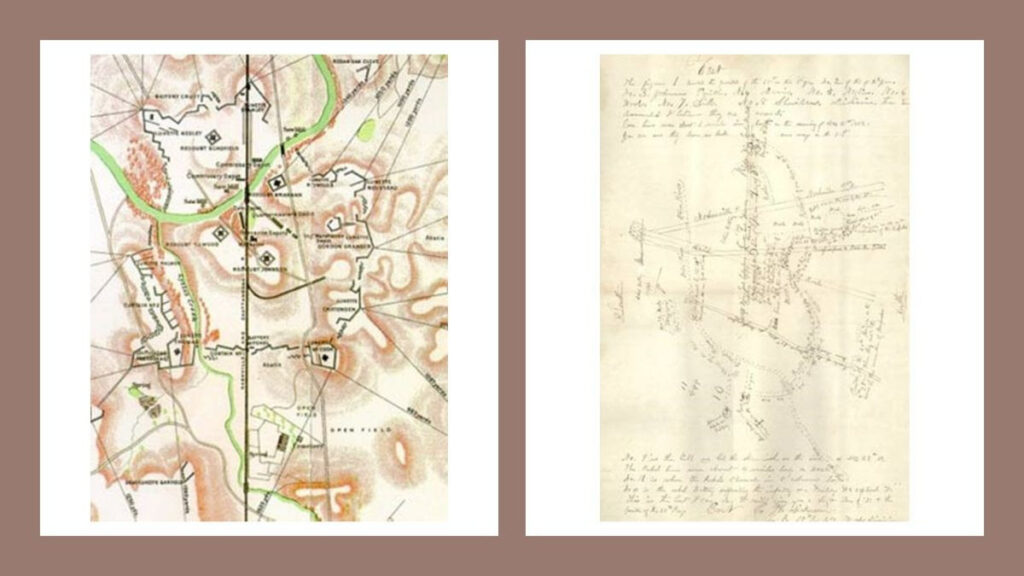
After the Confederates withdrew from Murfreesboro, General Rosecrans gave orders to fortify the area. The Sixty-fifth Ohio helped build part of Fortress Rosecrans. Private Nickerson wrote that the breastworks they were building were “very strong.” The Fortress protected an area of more than 200 acres and a vast supply depot. While in Murfreesboro, Private Nickerson became Sergeant Nickerson.
In September the 65th Ohio took part in the Battle of Chickamauga. During this battle Sergeant Nickerson was wounded and captured. He went to a prison camp near Richmond, VA. Spring 1864, he transferred to the newly opened camp at Andersonville, Georgia. He spent the rest of the war there.
Sergeant Nickerson did not die at Andersonville as many others did. Near the end of the war he and several hundred other Union Prisoners of War moved to Vicksburg, Mississippi to begin their passage home. These men were weakened from their experiences in Andersonville. In April of 1865 Sergeant Nickerson boarded the S.S. Sultana excited at the prospect of heading home. The Sultana was 260 feet long and had a legal carrying capacity of 376 passengers and crew. One of the Sultana’s boilers had a bulging wall plate. Instead of replacing it entirely the Captain decided to have the defect patched. On April 27, 1865 this poorly repaired boiler exploded when the Sultana was 9 miles north of Memphis. The explosion killed more than 1,800 men. Charles Nickerson and hundreds of men who had so recently left the horrors of Andersonville behind were among the dead.
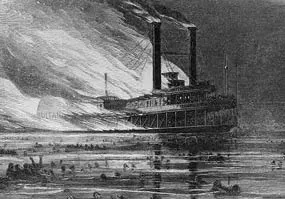
Charles Nickerson’s death after surviving so many trials is one of many tragic endings that make up the story of the Battle of Stones River and the Civil War.
Despite Murfreesboro’s rapid growth, TCWPA partnering with American Battlefield Trust continue to preserve places where the dramatic events making up the Battle of Stones River unfolded. The effort to save more than 42 acres of land next to Stones River National Battlefield’s McFadden Farm unit is well on its way to becoming Schaefer Park managed by the city’s parks and Recreation Department. Three Civil War Trails waysides are already installed on this site where U.S. Col. Frederick Shaefer lost his life on December 31, 1862, and full public access to the site is expected by summer. Even more exciting is the recent purchase of more than 30 acres of land that will soon offer visitors a place to stand on the ground where the battle began and imagine those first hours of fighting when a significant U.S. victory seemed far from possible.